We live in a culture that quietly glorifies being busy and sleep-deprived. “I’ll sleep when I’m dead,” people joke. But here’s the thing — chronic poor sleep is one of the fastest ways to get there. And not just because you’re tired. Poor sleep is now linked to some of the most serious brain health concerns we face as a society, from cognitive decline and memory loss to anxiety, depression, and even Alzheimer’s disease.
So today I want to talk about something that doesn’t get nearly enough attention: why sleep matters so much for your brain, and why the alignment of your upper neck — specifically a small but mighty area called the cranio-cervical junction — plays a bigger role in your sleep quality than most people ever realize.
What Happens In Your Brain While You Sleep
Sleep isn’t downtime. Your brain is incredibly active while you’re unconscious, running what scientists have come to call “maintenance mode.”
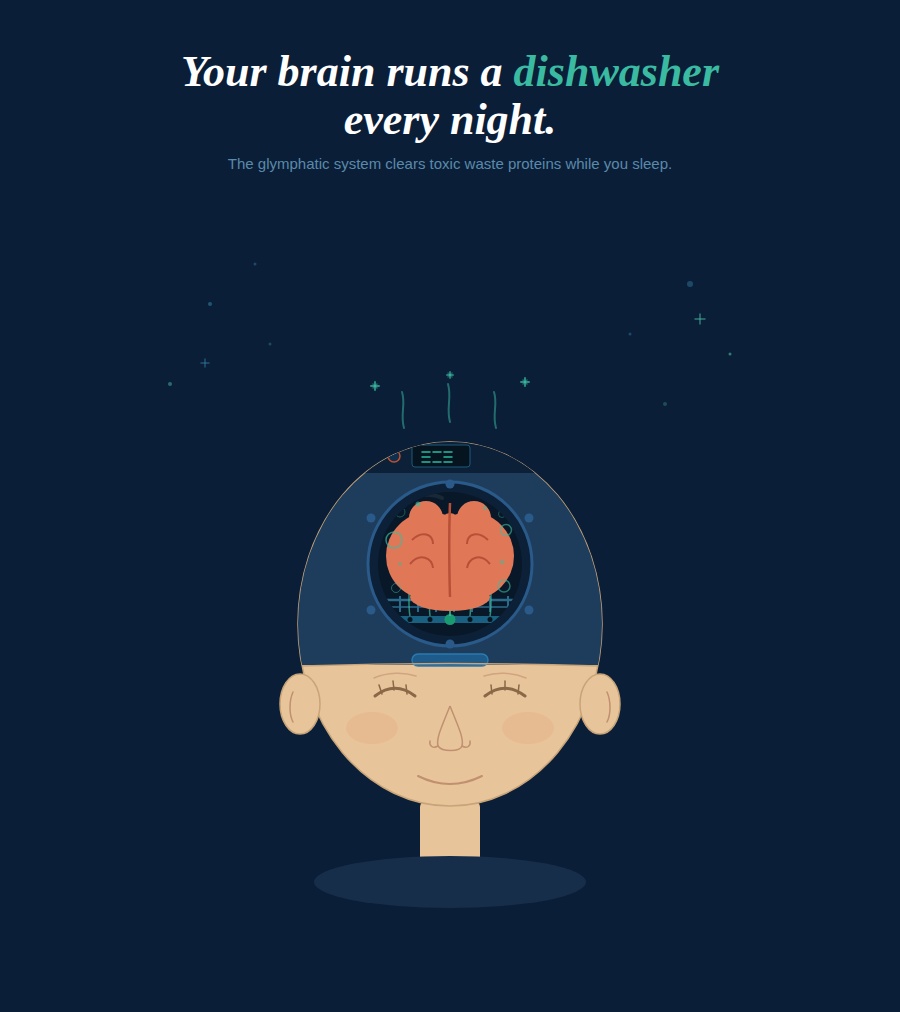
During deep sleep, your brain activates something called the glymphatic system — essentially your brain’s own waste-clearance network. Cerebrospinal fluid (CSF) flows through channels around your brain cells, flushing out metabolic waste products, including toxic proteins like beta-amyloid and tau — the same proteins associated with Alzheimer’s disease.
Think of it like a dishwasher running at night. Skip enough nights, and the buildup starts to show.
Beyond that, while you sleep your brain is:
- Consolidating memories and transferring learning from short-term to long-term storage
- Regulating hormones like cortisol, growth hormone, and leptin
- Repairing and restoring neural connections
- Resetting your emotional thermostat — which is why everything feels harder when you haven’t slept well
When you consistently miss out on quality sleep, these processes get interrupted. Over time, the effects compound: brain fog, mood instability, weakened immune function, slower thinking, and increased risk of serious neurological disease.
So Where Does Your Upper Neck Come In?
This is where things get really interesting — and honestly, where I think upper cervical care doesn’t get nearly enough credit.
The cranio-cervical junction (CCJ) is where your skull meets the top of your spine — specifically the first two vertebrae, the atlas (C1) and axis (C2). It’s a small area, but it sits at the crossroads of some of the most important structures in your entire nervous system.
Here’s what’s happening in that tiny region:
The brainstem. Your brainstem passes directly through the upper cervical spine. It controls your autonomic nervous system — the part that manages heart rate, breathing, blood pressure, and your sleep-wake cycle. A misalignment at the CCJ can create mechanical stress on the brainstem, interfering with those automatic functions you don’t even think about — including your ability to fall asleep and stay asleep.
Cerebrospinal fluid flow. The movement of CSF — the same fluid that powers your brain’s glymphatic cleaning system — is closely tied to the mechanics of the upper cervical spine. Research is increasingly pointing to how restrictions or misalignments at the CCJ can impair CSF circulation. If that fluid isn’t flowing properly, your brain’s ability to clear waste during sleep is compromised.
The vagus nerve. This major nerve, which runs through the upper cervical region, is a key player in your body’s “rest and digest” state. When the vagus nerve is irritated or compressed due to structural stress at the CCJ, your nervous system can stay stuck in a low-grade fight-or-flight mode — making deep, restorative sleep hard to come by no matter how early you go to bed.
What Orthospinology Does Differently
Orthospinology is a precise, gentle form of upper cervical chiropractic care. Unlike general chiropractic adjustments, there’s no twisting, cracking, or forceful manipulation of the neck. Instead, corrections are based on detailed, individualized x-ray analysis to determine the exact nature of your misalignment — because no two people’s spines are identical.
The correction itself is delivered with a light, controlled instrument-assisted touch behind the ear. It’s designed to restore the proper position and movement of the atlas vertebra at the base of your skull, reducing the neurological interference at the CCJ.
When that alignment is restored, the downstream effects can be significant:
- Reduced mechanical tension on the brainstem
- Improved CSF flow and drainage
- A nervous system that can more easily shift into parasympathetic (rest and repair) mode
- Fewer physical stressors keeping your body from relaxing at night
Many of our patients are surprised to report that their sleep improves after beginning care — sometimes dramatically — even when sleep wasn’t the main reason they came in. It makes sense when you understand what’s being affected.
The Big Picture
Sleep isn’t a luxury. It’s the foundation that every other aspect of your health is built on. And for your brain specifically, it may be the single most important daily habit you have — or don’t have.
If you’ve been struggling with sleep and haven’t considered whether your upper neck alignment might be a piece of the puzzle, it’s worth the conversation. Orthospinology care isn’t just about neck pain or headaches. It’s about optimizing the function of your nervous system at its most critical junction — and giving your brain the conditions it needs to do its best work, every night.
Have questions about how upper cervical alignment might relate to your sleep or brain health? We’d love to hear from you. Reach out to our office (904.310.0064) — we’re always happy to talk through what you’re experiencing and whether this kind of care might be a good fit for you.