Precision Chiropractic

  • Facebook
  • Twitter

Schedule a Consultation 904.310.0064

  • Home
  • Upper Cervical
  • Conditions
    • Dizziness & Vertigo
    • Migraines & Headaches
    • Dysautonomia & Autonomic Symptoms
    • Neck Pain & Whiplash
  • Meet Your Doctor
  • Schedule a Consultation
  • Blog
  • Contact Us

Dizziness: finding solid footing on a frustrating condition

October 23, 2017 By Dr. Kevin Lin

Dizziness is Hard to Diagnose

When people have dizziness as a complaint, it can be one of the most commonly misdiagnosed and mistreated conditions around. The challenge is that dizziness is a symptom that can be associated with lots of different conditions. Here’s a short list of conditions associated with dizziness:

Primary dizziness: Dizziness as a primary disease entity

  • Positional vertigo (BPPV)
  • Meniere’s disease

Secondary dizziness: Dizziness as a result of another problem

  • Stroke
  • Migraine
  • Concussion
  • Tumors
  • Medications

On top of that, dizziness means something different to different people. Does your dizziness feel like spinning? Rocking? Feeling off balance? Light headedness? Sometimes the feeling of dizziness can be hard to describe because you just feel disoriented and lost in space.

All of these factors are important to help a doctor get the right diagnosis.

It means that a doctor has to take a good health history, perform the right bedside tests, and order the appropriate diagnostic testing to find out the cause of your dizziness. Without knowing what’s causing this feeling, then administering the right treatment can be a lucky guess at best, or make you more dizzy at worst.

It’s no wonder that people who have chronic vertigo and other balance issues often see their primary care doctor, neurologist, ENT, physical therapist, acupuncturist, and more looking for answers on how to get their world to stop moving.

Dizziness is Even Harder to Treat

Another challenge with dizziness patients is that medications don’t really do a good job of making the world stop moving. Many patients with chronic dizziness are placed on anti-depressants, anti-anxiety meds, and drugs for nausea. The problem with that is that the patient may not be as nauseated, but their brains are not responding to their environment appropriately.

Dizziness after spinning on a bat is easy to explain, but what if the world is spinning when you're standing still?

Dizziness after spinning on a bat is easy to explain, but what if the world is spinning when you’re standing still?

Dizziness can also be treated by positional maneuvers like the Epley maneuver and head shaking exercises like gaze stability. Both are extremely effective when they are used appropriately, but can be useless if it’s performed on the wrong patient with the wrong diagnosis.

That’s why it’s so important to know what’s really going on with a patient. Many clinics will take any person with dizziness and just do some of these maneuvers even though the maneuvers may not be appropriate for the patient’s specific condition. In order to help a patient recover, we have to examine them closely to make sure that we have the right information to begin care.

Case Study:

Recently we had a patient come in with dizziness and had been seeing an ENT for treatment. She was having problems feeling off balance for a while and it was made with head turning sometimes. She wasn’t experiencing a spinning type sensation, but just a sense of feeling out of sorts.

The doctor diagnosed her with benign paroxysmal positional vertigo or BPPV. It’s arguably the most common form of vertigo and is usually easily treated with a positional maneuver called the Epley maneuver. The doctor performed Epley and gave her some alternative maneuvers that she could do at home whenever she felt dizzy.

The problem was that the maneuver wasn’t changing anything. She tried doing the maneuvers for several weeks with no change. When she followed up with the doctor, the doctor told her there wasn’t anything else he could do and that some cases don’t respond.

Fortunately the patient found her way to our office through a referral from one of our patients who got really great results with balance problems

BPPV usually causes a spinning sensation that is really short lived. In many cases, doctors can diagnose BPPV with a test called the Dix-Halpike maneuver. You can look at this test below. If you have BPPV your eyes will start moving making a fast oscillating movement called nystagmus.

It’s this nystagmus when the inner ear moves the eyes that creates a feeling of spinning.

When this patient came in, we did a thorough history and found out that her “vertigo” didn’t have any spinning at all. She just felt disoriented and off balance. We performed the Dix-Halpike test and she had her eyes stayed solid.

So now we knew that she probably didn’t have BPPV, and that’s why the Epley maneuver didn’t work that well for her. It was time to figure out what other anatomy might be causing her problem.

We did a test called the smooth pursuit neck torsion test. It’s a test developed from patients who had dizziness after whiplash. It’s an indicator that the neck might be causing the eyes to move abnormally. You can see that test here below. In patients with neck problems, the eyes will start jumping instead of staying smooth.

Now that we knew the neck could be a problem, we started addressing the neck using the NeuroStructural correction procedure.

Within 2 visits, the patient’s dizziness was about 80% gone. We have more work to do to help the neck heal, but with some time I think this patient will get back to normal.

Find the Cause, Deliver the Solution

So this isn’t an indictment on another professional. Lots of ENTs keep their focus on infections of the ear, nose, and throat. An ENT with a neurology background would probably have found the same thing and recommended physical therapy or chiropractic care.

The lesson here is that dizziness is complicated, and one treatment won’t solve all forms of dizziness. For any condition, we have to spend time with our patient, listen to their history, examine them thoroughly, and we can find a game plan to help them get back to normal.

( This blog was originally posted by my friend and colleague, Dr. Jon Chung at his website, he has given me permission to reproduce it here)
Filed Under: Blog

Breaking The Loop

June 20, 2017 By Dr. Kevin Lin

Last week, we talked about why change can be so hard.  It’s difficult because it’s actually hard-wired into our neurology.

Does that mean we should give up on bettering ourselves?  Abandon our goals shy of meeting them because it doesn’t seem like success is possible?

OF COURSE NOT!  We are not prisoners of our habits.

Just because change is hard and most definitely uncomfortable, there are a few things you can do to make it a bit easier on yourself.  Once you understand that neuroscience is behind the formation of habits, then it becomes possible to “hack” the system to create your desired outcome.

  • Use your prefrontal cortex – the prefrontal cortex is the part of the brain that plays a large part in planning, organizing, impulse control and personality development.  It is the last portion of the brain to fully develop, which is the reason why children aren’t able to make the same complex plans and decisions that adults can.  Changing habits starts with acknowledging the mindlessness of them; many of our habits are responses that have become automatic.  We have the power to choose a different response by putting our prefrontal cortex to work and becoming hyper-aware of our habits.
  • Focus on what you ARE going to do – when we set goals, we usually tell ourselves what we’re NOT going to do.  “I’m not going to eat sweets”, “I’m not going to spend so much time checking e-mail”, and so on.  The brain’s habit-learning system doesn’t respond to NOT, but it will begin to change when you tell it what you ARE going to do.
  • Control the environment – changing the environment around you to make undesirable habits harder and desirable ones easier can help you to succeed.  Keeping a jar of cookies on your counter when you’re trying to kick a sugar habit doesn’t make you a bigger hero when you have the willpower to resist.  Just get rid of the cookies.
  • Celebrate your wins, even the little ones – rewarding yourself for progress helps to reinforce the changes you are working to make.  Rewards don’t need to be complicated or extravagant.  Oftentimes the best rewards are natural results of your efforts: better health, more happiness and increased energy.
  • Most importantly, have a manageable plan – in order to rewire your brain, consistency is key.  If you’ve never run before, a marathon is not the first logical step.  Starting small while keeping the big picture in mind will create a doable action plan that will help you create the change you’re looking to make.

We all have habits we hope to change.  We can start by becoming aware of them, consciously deciding to make a different choice about what we’ll do instead.  Removing obstacles that make us stray off course and rewarding ourselves appropriately for our progress will help us stay focused on our goals.  It’s not about making one huge leap, it’s a process of small, steady steps that will rewire our brains to change.

“Change is hard at the beginning, messy in the middle and gorgeous at the end.” – John Charles Polanyi

Filed Under: Blog

Why Is Change So Hard?

June 12, 2017 By Dr. Kevin Lin

Why is change so hard?

Have you ever tried shed an old bad habit and failed? Maybe made a New Year’s resolution that you couldn’t keep?

Well it’s your brains fault.

Everything we do, feel or think is built into our neurology. Neurons in our brain communicate with each other via neurotransmitters and synapses that form an intricate network of trillions of synaptic connections. The connections form the circuits that literally wire habits in our brain.

The more often we think of something, or do something, or feel something, the connections get stronger. The adage, “ if you don’t use it you lose it” is true here but in reverse. When we do something over and over again, the stronger the neural connections. The busier regions of the brain will get more blood flow, the neural layers will thicken, and more neurons will grow.

“Neurons that fire together, wire together.”  Donald Hebb

Like a busy path in the woods, the ground is worn from repetitive use. What happens when that path is forgotten? The path is covered and eventually returned to the forest.

This at first glance can be very sobering, but in this case, the obstacle is the way.

The same adaptability of the brain to develop these bad habits are the keys to unlocking the path to developing new connections and habits.

Next week we will talk about how to take the steps to reprogram our brains!

Filed Under: Blog

Mythbusters: The Skinny on Fats

May 22, 2017 By Dr. Kevin Lin

By now you have certainly heard of the folks raving about some of the latest trends in diets such as paleo, Whole30, ketogenic, pre-agricultural, primal eating. It seems that there is a war on bread and carbs, but is there any truth to it?

Let’s set some ground rules before we get too far in the weeds. The first thing you need to understand is that no diet will work for everyone due to something known as Bio-Chemical Individuality. Secondly, food in its simplest form is energy that comes in a variety of mediums, compositions, and flavors.

Carbohydrates aka carbs are regarded as the most common form of energy as they are metabolized by the body very quickly and are fast acting. Carbs encompass many types of food such as grains, sugars, fruits, legumes, starches and even alcohol. Proteins are made from chains of amino acids and come from plant and animal sources. Protein is typically meat but is also found in beans, nuts, and other plant sources. Fats are also known as lipids and come in many forms from animals, plants such as coconuts, and nuts.

So what is all the fuss over fat all of a sudden??!

Fat one of the most important roles in the body. Brain tissue is made up of almost entirely fat as well as something called Myelin that covers the majority of the brain, spinal cord and nerves in the body. Fat as a fuel source is much more efficient as it takes longer to be metabolized by the body and has more energy to be gained than carbs.

But isn’t fat really bad for you and increase the risk of heart disease??!!

Well, sort of. The quality of the fat is very important, research has proven that fats coming from grass fed cow sources are healthier than their traditional counter parts. (1) Spending the extra few bucks is actually worth it. In late 2016 some controversy over the food pyramid was discovered in the 1960’s related to fat and heart disease. According to The Journal of the American Medical Association (JAMA) found: “recent analyses of sugar industry documents, our findings suggest the industry sponsored a research program in the 1960s and 1970s that successfully cast doubt about the hazards of sucrose while promoting fat as the dietary culprit in CHD”. (2)

We will always advocate for giving the body what it needs to do its normal function, and making sure the spine is free of structural shifts that negatively affect the body by way of the brain and nervous system. So here is what we recommend:


  • Use healthy fats for cooking like grass fed butter, olive and coconut oil
  • Quality omega 3 supplement
  • Limiting the quantities of sugar and artificial sweeteners
  • Bacon, LOTS OF BACON

1. https://nutritionj.biomedcentral.com/articles/10.1186/1475-2891-9-10

2. http://jamanetwork.com/journals/jamainternalmedicine/article-abstract/2548255

Filed Under: Blog

Is more always better? The NeuroStructural approach to the Adjustment

May 15, 2017 By Dr. Kevin Lin

Most people have been to a chiropractor before.  Seeking out a chiropractor is often the first think people think of when they’re experiencing some kind of neck or back issue.  No matter what part of the country you live in, there’s no doubt that you have a lot of choices.  In some places, it seems like there’s a chiropractor on every corner.  We’re giving Starbucks a run for their money!  How have you chosen a chiropractor in the past?  Cost?  Proximity to your home?  Quality of care?  Adjusting technique?

What makes a good adjustment?

Is it one that is done by hand or with an instrument?

Is it one that “pops” or “cracks”?

Is it one that provides instant relief only for the problem to arise again after a few days?

Or is it one that is tailor-made for each individual patient and designed to hold in place for as long as possible?

At Precision Chiropractic, we focus on that last type of adjustment.

How many times do we visit other healthcare providers and hope for a clean report or that no procedure is necessary that day.  Why should chiropractic care be any different?  With NeuroStructural Chiropractic care, we are more concerned with lasting results that allow your body to FUNCTION better rather than temporary relief that merely allows the body to FEEL better in the short term.

Let’s start with a simple question: are more adjustments better?

If more adjustments were better, then we’d want to see our patients morning, noon and night.  The way we look at it, the factor that will make the greatest difference in your health is taking something that lies outside a normal range, guiding it back towards normal, and keeping it that way that way for as long as possible.  We are not simply pushing bones from point A to point B, we are removing constrictions in your body’s wiring system so that your brain and body can communicate as they were intended to.

How do we accomplish this?

During our intake process, we take thorough measures to establish your baseline in two key areas – Digital Structural Radiographs and NeuroFunctional Scans.  As a science-based practice, we are keeping score on your progress using these two tools as our guide.  The tools that we use remove all the guesswork.  We know:

  • When you need to be adjusted
  • When we need to leave it alone and let it continue healing
  • If the adjustment we did make was successful
  • That we’re sending YOU out the door better off than when you walked in.

Our patients take comfort in knowing that we have a system to know when you’re in alignment and we need to leave things alone to continue the healing process, or when you’re out of alignment and an adjustment is needed.  One thing we can guarantee you WON’T experience in our office is an adjustment when one is not necessary.  It is because we take this calculated and individualized approach to care that we can achieve results that reach beyond fleeting relief.

Filed Under: Blog

Monthly Report: The Research Files (May)

May 8, 2017 By Dr. Kevin Lin

Research Review: The Possible Role of Cranio-Cervical Trauma and Abnormal CSF Hydrodynamics in the Genesis of Multiple Sclerosis

What is this research about?

This research paper focuses on how Cranio-Cervical (head and neck) trauma can cause Multiple Sclerosis due to abnormal CSF hydrodynamics. The eight MS patients studied in this article had two things in common: 1. Abnormal CSF flow shown in upright MRI studies 2. A history of Cranio-Cervical Trauma.


What is the science behind this research?

Cerebrospinal fluid (CSF) is a clear, colorless liquid that bathes the brain and spinal cord. While the primary function of CSF is to cushion the brain within the skull and serve as a shock absorber for the central nervous system, CSF also circulates nutrients and chemicals filtered from the blood and removes waste products from the brain.

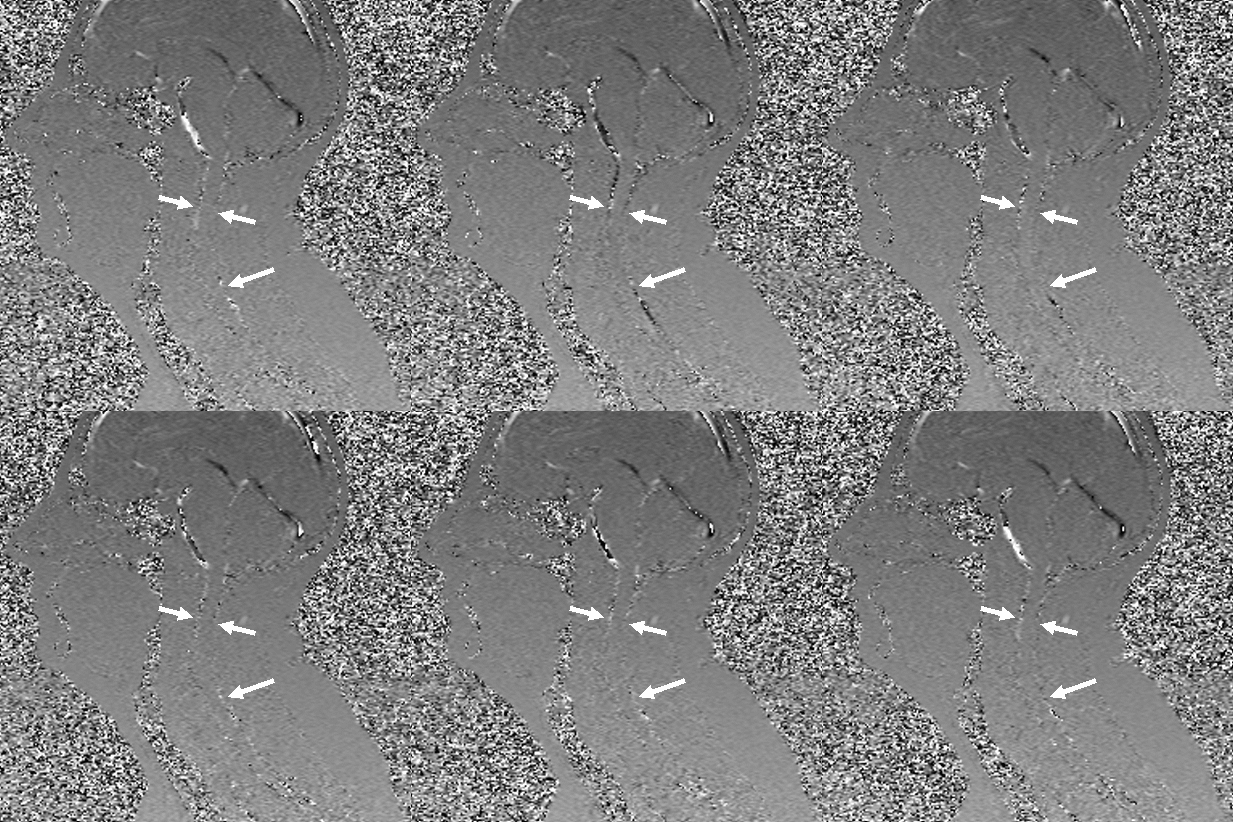
Cerebrospinal Fluid flow can be altered in the neck due to abnormal shifts of the cervical spine which leads to lesions of the spinal cord and brain. Altered CSF flow create abnormal hydrostatic pressure in the skull that pushes CSF into the brain tissue. Additionally, the turbulent flow of the CSF can also wear on the sensitive neurological tissues of the brain and spinal cord.


Normal CSF Flow

Abnormal CSF Flow


Why is this important?

This is important for ALL patients, not just those diagnosed with Multiple Sclerosis. This study indicates that unresolved head and neck trauma can cause neurological damage that can lead to MS but also a myriad of other secondary conditions.


What does it mean for me? 

If you’ve had trauma to your head and neck, it is important to get checked in our office for abnormal shifts in the cervical spine. You may also need an upright MRI study to observe the abnormal CSF flow.

After a head or neck trauma, most of us are more concerned with the immediate effects of the injury. However, this study shows that we should also be concerned with prolonged periods of abnormal CSF hydrodynamics and the subsequent neurological deficits.

LINK TO RESEARCH PAPER

Filed Under: Blog

3 Health and Wellness Podcast You Should Be Listening To

April 17, 2017 By Dr. Kevin Lin

Podcasts are a fun and easy way to get health, fitness, and nutritional information on the go! You can listen to it in your car, while you work, or in the gym as you exercise. Another great feature of podcasts is that they’re FREE! Here are the three that I listen to regularly that would be a good start if you don’t know where to begin! Enjoy!

  1. Bulletproof Radio

Dave Asprey is a Silicon Valley investor and entrepreneur, a professional biohacker, and the creator of Bulletproof Coffee made with butter. He is host of Bulletproof Radio, a nationally syndicated radio show and #1 ranked podcast with 10 million downloads. Dave serves as Chairman of the Silicon Valley Health Institute.

Dave spent 15 years and $300,000 to hack his own biology. He used techniques to upgrade his brain by more than 20 IQ points, lowered his biological age, and lost 100 lbs without using calories or exercise.

His work has been featured on The Tonight Show, Nightline, Forbes, CNN, ABC News and FOX News. His writing has been published by the New York Times and Fortune, and he’s been featured in The Financial Times, Rolling Stone, Men’s Health, Vogue, Fast Company, Marie Claire, Women’s Health, and dozens more.

Dave’s work is born out of a fifteen-year single-minded crusade to upgrade the human being using every available technology. It distills the knowledge of more than 120 world-class MDs, biochemists, Olympic nutritionists, meditation experts, and hundreds of thousands of dollars spent on personal self-experiments.

From 40 Years of Zen private brain EEG facilities hidden in a Canadian forest to remote monasteries in Tibet, from Silicon Valley to the Andes, high tech entrepreneur Dave Asprey used hacking techniques and tried everything himself, obsessively focused on discovering:

What are the simplest things you can do to be better at everything?

Knowing this leads to being bulletproof, the state of high performance where you take control of and improve your biochemistry, your body, and your mind so they work in unison, helping you execute at levels far beyond what you’d expect, without burning out, getting sick, or just acting like a stressed-out jerk. It used to take a lifetime to radically rewire the human body and mind this way. Technology has changed the rules.

iTunes Link

2. The Fat-Burning Man Show by Abel James

Abel James is a New York Times bestselling author and modern-day Renaissance man. He stars as a celebrity coach on ABC television and has been featured in People Magazine, WIRED, Entertainment Tonight, and NPR. As host of the #1 podcast in 8+ countries, Fat-Burning Man, Abel has helped millions reclaim their health and perform at their best with cutting-edge science, outdoor workouts, and outrageously good food.

Abel has keynoted for the Federal Government, lectured at Ivy League universities, and advised Fortune 500 companies including Microsoft, Danaher, and Lockheed Martin. He was named as one of the 100 Most Influential People in Health and Fitness by Greatist in 2015 and 2016.

Distinguished as a Senior Fellow with Honors from Dartmouth College, Abel created his own curriculum to specialize in brain science, music, and technology. He later published his research in The Musical Brain, which became a #1 Amazon bestseller.

iTunes Link

3. Half Size Me

The Half Size Me™ Show is a weekly podcast focused on helping you lose weight and get healthy in a real, sustainable, and maintainable way. Host Heather Robertson interviews real people who share their inspirational stories of weight loss and maintenance. Along with real world tools, resources, and tips to help you achieve your own weight loss and wellness goals, you’ll get your questions answers in the Ask Coach Heather sessions. So, whether you’re just getting started losing weight, already a maintainer, or somewhere in between, The Half Size Me™ Show is for you!

iTunes Link

Filed Under: Blog

Tech Addiction: The Dangers of Screen-time

April 2, 2017 By Dr. Kevin Lin

Gone are the days of encyclopedias, library card catalogues, and land lines. The teens and young adults of today have never known a world without the internet, smartphones, and mp3 players. The world has been at their fingertips from the time they were born. 

With the rise of smart technology comes the risk of technology addiction. The problem is pervasive. Friends and family are enjoying a meal out together, yet everyone is buried in their phones. Accomplishing straightforward tasks at work takes twice as long with each social media notification to check. 

This problem is not only impacting how we relate and connect to one another, it is actually causing structural, physical changes in our body. Neuroscience has been looking at internet and technology addiction and how it is damaging the tissues of our brains: 

  • Atrophy of gray matter – tissues of the brain actually shrink in key areas of the brain that control functions such as organizing, planning, prioritizing, and impulse control.  Damage was also noted in areas of the brain that play a role in our ability to be empathetic and compassionate towards others. 

  • Damage to white matter – the white matter of the brain forms the connections between different areas and plays a critical role in communication of nerve signals. Interrupted connections means loss of normal communication between the brain and body. 

  • Impaired dopamine function – the release of dopamine forms the basis for addiction, whether it be to food, smoking, gambling or screen-time.  Dopamine is the brain’s feel-good fuel. Prolonged internet use leads to a reduced number of dopamine transporters, which results in a vicious cycle of excess dopamine creating a reward for winning that internet game or getting another “like” on your Facebook post, only furthering the addictive behavior.   

The concern is even greater with younger people whose brains are still actively developing. The average child clocks more than 7 hours of internet usage daily. This can easily contribute to a nervous system that is on overdrive, akin to a car with a gas pedal but no brakes. This can lead to many secondary issues, including attention span problems, mood changes, impulsivity, and a lack of restorative sleep. 

In a nutshell, excessive screen-time causes structural changes in the brain, leading to functional impairments. The majority of the damage happens in the frontal lobe, the part of the brain that will effectively determine the capacity for success in every facet of life, from academics, to relationships, to your sense of well-being. 

Breaking The Cycle 

Limiting screen time, for ourselves or our kids, can be a challenge. Phones and tablets are a ubiquitous part of our society now, but arming yourself with the facts of the ramifications they have can help rein in addictive behaviors. 

Rules of thumb to follow: 

  • Stop using your phone as an alarm clock. Not only can having your phone nearby interrupt your normal sleep cycle, having it within an arm’s reach on your bedside table makes it very easy for it to be the first think you reach for in the morning. 

  • Set up phone-free times for you and your family. Some good times to consider are meal times (dining in or out), and at least an hour before bedtime. 

  • Use an app such as Freedom to set appropriate limits on app and internet access.  If you need to be on the computer to get things done, Freedom will keep you from losing focus and finding yourself down a social media rabbit hole 20 minutes later. 

The internet isn’t going anywhere, and it’s not all bad. We are more connected than ever before, and this has many positive effects too. The important part is being able to control our technology use, and especially that of our children.  Technology is an incredibly powerful tool when used appropriately, but care must be taken to not cross the line into addictive behavior that can have lifelong negative effects. 


https://www.theatlantic.com/health/archive/2012/07/exploiting-the-neuroscience-of-internet-addiction/259820/ 

https://www.psychologytoday.com/blog/mental-wealth/201402/gray-matters-too-much-screen-time-damages-the-brain 


Filed Under: Blog

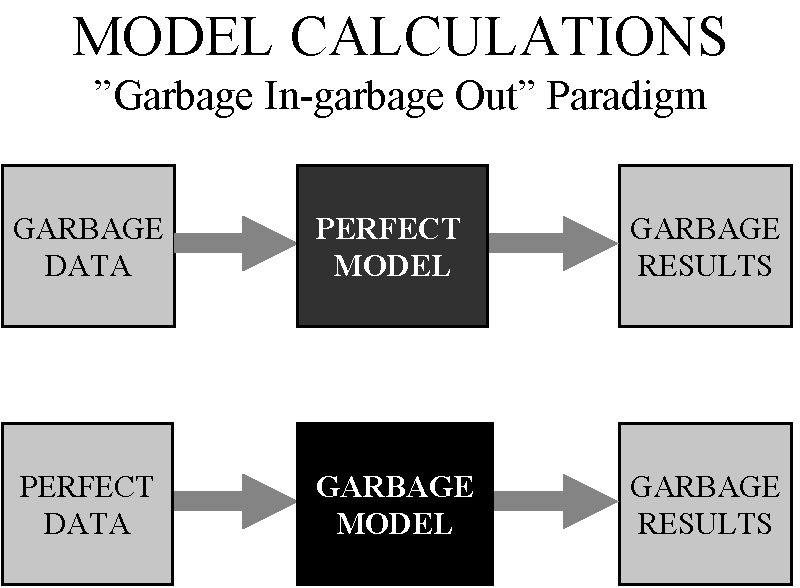
Garbage In, Garbage Out : Your neurology as a system

March 27, 2017 By Dr. Kevin Lin

Your health depends on the ability of your nervous system to interpret information from your body and environment, and to react/adapt properly. For instance, when you eat a donut and the sugar floods your blood stream, the nervous interprets that information and directs the proper response, taking that sugar and storing it into our fat cells. This is something that is happening constantly within our bodies, as we sleep, as we play, as we work. When this system is working well, it is like a symphony, all the different sections playing their part to create a wonderful, coordinated, and efficient concert. Unfortunately, this isn’t always the case . Abnormal shifts within the spine obstructs the nervous system. The conductor has one hand tied behind his back and the symphony breaks down into disarray.

When this breakdown happens, the information from the joints and muscles around the spine is flawed and when it is interpreted the adaptation is equally flawed and broken. In computer programming, this is called Garbage IN, Garbage OUT. In our bodies, the abnormal information from our nerves causes secondary postural distortions, pain, stiffness, and degeneration of the disk and joints in the spine. Without proper information, the body fails to interpret itself and the surrounding environment.

NeuroStructural Chiropractic is designed to help your body with this problem by removing abnormal shifts in the spine that is causing garbage data/input. We know that the human body is the most amazing model/system, all it needs is good input for good health. Get checked to make sure you don’t have any abnormal shifts disrupting your system!


Filed Under: Blog

Head and neck injuries can cause damage to your genes!

March 18, 2017 By Dr. Kevin Lin

Head Injury, Brain Disease & Master Genes

It’s no secret that there’s a growing awareness about the short- and long-term ramifications of head injury. The NFL has an evolving concussion protocol and the scientific research studies that came out at the end of 2016 showed that youth football players had brain changes even without a concussion diagnosis.  Head injuries, of course, are not just reserved for football players.  The child on the playground, the cyclist, the fender-bender – nobody is immune.

Very recent research is making a connection between head injuries and the alteration of genes that can lead to some serious brain diseases.  Researchers identified, for the first time, “master genes” in the brain that they believe are responsible for the control over hundreds of other genes which are linked to many neurological and psychiatric disorders:

Parkinson’s disease

Alzheimer’s

PTSD

ADHD

Autism

Depression

Schizophrenia

Stroke

What Is A Gene?

We hear all the time that many traits or conditions are genetic, or in one’s genes.  What does this mean?  The gene is the basic unit of heredity.  If you could look inside any of your body’s 50 trillion cells, at the very center in the nucleus you’d find 46 chromosomes – 23 from your mother and 23 from your father.  These chromosomes are the blueprints that hold the instructions to construct and maintain your body – your DNA.  A gene is a distinct stretch of DNA that determines a specific characteristic about you, from your hair and eye color, to your susceptibility to certain inherited health conditions.

Damaged Gene –> Damaged Protein

The working theory of this current research is that these master genes are damaged after a traumatic brain injury and can trigger further damage to the other genes under their control.  Genes have the potential to become one of many types of proteins.  When the brain tissue is injured, the proteins they become can be irregular or damaged.  Alternatively, the number of expressed copies of the gene can be altered, which can also prevent the gene from working properly.  The bottom line is damaged gene = damaged protein = potential for disease such as Alzheimer’s.   

What does this mean for people who have had traumatic brain injuries?  The promising news in this early research is the potential for a gene-based blood test that can determine if a head injury has caused these changes.  The ability to measure some of these genes may lead to early predictions of whether a person is at a higher risk of developing any of the related neurological or psychological conditions.   

In the meantime, taking care of your brain after a head  injury is always the best form of protection as far as future health conditions are concerned.  A good omega-3 supplement, vestibular rehabilitation, NeuroStructural Chiropractic care, and time for the injured tissues to heal are your best lines of defense.

Head Injuries Can Alter Hundreds of Genes And Lead To Serious Brain Diseases

What is a gene?

Brain Changes Seen In Youth Football Players Without Concussion

Filed Under: Blog

« Previous Page
Next Page »
  • Schedule a Consultation
  • Upper Cervical Chiropractic In Fernandina Beach
  • How Upper Cervical Chiropractic is Different
  • What is an Upper Cervical Misalignment?
  • Conditions We Commonly Evaluate
  • Is Upper Cervical Care Right for me?
  • What to Expect at Your Examination
  • Understanding Your Care Options
  • What Care at Precision Looks Like

Latest Blog Posts

The Energy Cost of an Inefficient Spine

Why you can be tired and sore at the same time — for no reason you can name You slept eight hours. You didn't lift … [Read More...]

When Anxiety Is More Than a Thought: The Connection Between Dysautonomia, Sympathetic Dominance, and the Upper Cervical Spine

When most people hear the word anxiety, they think of excessive worry, stressful thoughts, or an emotional reaction to … [Read More...]

more blog posts »

Location & Contact Info

Precision Chiropractic
1699 S. 14th Street, Unit 18,
Fernandina Beach, FL  32034

904.310.0064 or send us an email

  • Facebook
  • Twitter

What Our Patients Are Saying

Excellent
Precision Chiropractic4.9
Based on 236 reviews
See all reviews
review us on
Warren D
2 weeks ago
Kylene Globis
3 weeks ago
I started seeing Dr. Lin almost two years ago and the difference he has made with my headaches is truly remarkable. I had migraines often when I first started seeing him, and although my headaches haven’t fully subsided that’s partially due the physical position I’m in while doing my work; however, I find going once a week is incredibly helpful and makes it manageable. I can feel when I need an adjustment right away, and I immediately feel better every time. My quality of life has changed and it’s nice to have someone I fully trust that helps keep my head on straight so I can give care to my patients too! I’m grateful to the entire staff for always being so kind, welcoming, and working with my schedule! Thank you 🙏
Debbie McNamara
4 weeks ago
If you are struggling with cervical, back or shoulders issues I highly recommend Dr. Lin. I am very thankful to have found him. What really sets DrLin apart is his approach to chiropractic care. Rather than the traditional “cracking” or adjustments, he uses a specialized tool, a more scientific targeted approach. I have received tremendous improvement in my back pain. His staff is equally impressive. They are professional, kind and welcoming. I would absolutely recommend Dr. Lin and his team to any one looking for knowledgeable and compassionate chiropractic care. Debbie McNamara
Jeff Morrison
1 month ago
Excellent experience !! Dr. Lin explained the entire process up front and has followed through with a program that leaves me feeling better every session. The staff is friendly and professional. Would recommend them to anyone seeking overall healing .
Annika Forouzesh
2 months ago
If you’re pregnant, go see Dr. Lin! He is Webster certified and helped keep my body aligned throughout pregnancy so my baby could stay in an optimal position. A few times she shifted, and after an adjustment she’d be head down again within hours. I even went into labor about two hours after my last adjustment! Dr. Lin is so calm and gentle, and his entire team is wonderful. It honestly felt like visiting friends every week.
Clyde Miller
3 months ago
Jana Guynn
4 months ago
Chrystal Opheim
5 months ago
Kevin and his team do an amazing job. The environment in the office is always so relaxing, and everyone is professional, welcoming, and caring. I always have a great experience and would highly recommend them!
Tracy Hilton
5 months ago
Dr Lin and his staff are phenomenal! I originally came in a few years ago with unrelenting vertigo. After treatments to align my C1, no more vertigo. Keeping my neck in alignment set my body on a path to healing that has me feeling healthier than ever. So grateful! Highly recommend!
P F
5 months ago
Every time I leave this facility…I leave feeling better. Atmosphere, people, my Dr. results .. Try them, you’ll be glad you did.

Copyright © 2026 Precision Chiropractic, LLC · Log in