Precision Chiropractic

  • Facebook
  • Twitter

Schedule a Consultation 904.310.0064

  • Home
  • Upper Cervical
  • Conditions
    • Dizziness & Vertigo
    • Migraines & Headaches
    • Dysautonomia & Autonomic Symptoms
    • Neck Pain & Whiplash
  • Meet Your Doctor
  • Schedule a Consultation
  • Blog
  • Contact Us

When Anxiety Is More Than a Thought: The Connection Between Dysautonomia, Sympathetic Dominance, and the Upper Cervical Spine

July 28, 2026 By Dr. Kevin Lin

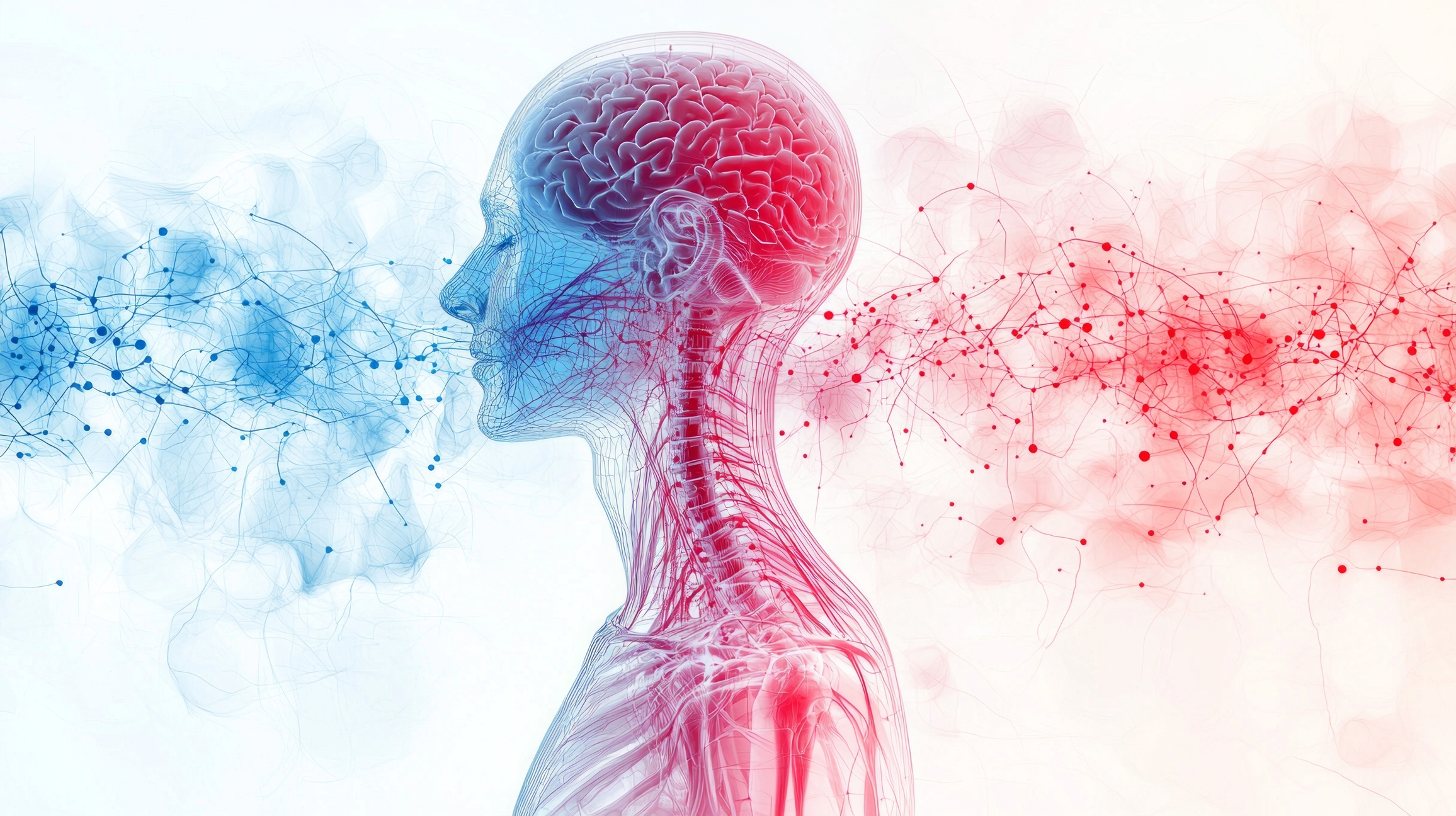
When most people hear the word anxiety, they think of excessive worry, stressful thoughts, or an emotional reaction to difficult circumstances. While those can certainly contribute, anxiety is not always generated entirely by the conscious mind.

Sometimes the body itself is producing signals of danger.

A racing heart, shallow breathing, dizziness, sweating, muscle tension, digestive disruption, trembling, and a sense of impending doom can all occur when the autonomic nervous system becomes dysregulated. The brain may then interpret these physical signals as evidence that something is wrong—even when no immediate threat exists.

Understanding this connection can change how we view anxiety and, in certain circumstances, may help explain why upper cervical care can be a valuable part of a broader approach.

What Is Dysautonomia?

The autonomic nervous system controls many of the functions that happen automatically, including heart rate, blood pressure, breathing, digestion, temperature regulation, sweating, and the body’s response to stress. Its major branches include the sympathetic and parasympathetic nervous systems.

The sympathetic nervous system prepares us to respond to a challenge. It increases heart rate, redirects blood toward the muscles, heightens awareness, releases stress hormones, and prepares the body to fight, flee, or protect itself.

The parasympathetic nervous system supports recovery. It helps slow the heart, regulate digestion, conserve energy, and return the body to a calmer baseline.

Neither system is good or bad. We need both. The problem develops when the nervous system struggles to move appropriately between activation and recovery.

Dysautonomia is a broad term describing abnormal regulation of these automatic functions. Depending on the individual, it may produce symptoms such as:

  • Rapid or irregular heartbeat
  • Dizziness or lightheadedness
  • Exercise intolerance
  • Abnormal sweating
  • Digestive problems
  • Fatigue
  • Brain fog
  • Temperature sensitivity
  • Shakiness or internal trembling
  • Feelings that closely resemble anxiety

Dysautonomia is not one single diagnosis. It includes several different conditions and patterns, which should be properly evaluated by an appropriate healthcare provider.

Sympathetic Dominance: When the Alarm System Stays On

The phrase sympathetic dominance is commonly used to describe a state in which the body spends too much time in a high-alert pattern and has difficulty returning to rest and recovery.

A sympathetically activated body may produce:

  • A pounding or racing heart
  • Rapid, upper-chest breathing
  • Tightness in the neck, jaw, or shoulders
  • Dilated pupils and increased vigilance
  • Difficulty falling asleep
  • Sensitivity to noise, crowds, or stimulation
  • Digestive slowing
  • Restlessness
  • A persistent feeling that something bad is about to happen

These sensations are remarkably similar to the symptoms of anxiety.

This creates a difficult feedback loop:

The nervous system activates.
The body produces alarming sensations.
The brain notices those sensations and interprets them as danger.
That interpretation further activates the nervous system.

Over time, the person may become increasingly focused on changes in heart rate, breathing, balance, or internal sensations. The anxiety is real, but the process may be flowing in both directions: thoughts affect physiology, and physiology affects thoughts.

“Is It Anxiety, or Is It Dysautonomia?”

Sometimes it can be both.

Postural orthostatic tachycardia syndrome, or POTS, provides a useful example. People with POTS may experience tachycardia, palpitations, trembling, dizziness, weakness, and shortness of breath when standing. These symptoms can resemble a panic attack, and POTS is sometimes initially mistaken for an anxiety disorder. However, research emphasizes that POTS is not simply caused by anxiety.

Certain patients with POTS have a hyperadrenergic pattern involving increased sympathetic activity and symptoms such as tachycardia, tremor, elevated blood pressure, palpitations, and anxiety-like sensations.

This does not mean that every person with anxiety has dysautonomia. It means that physical symptoms should not automatically be dismissed as “just stress,” particularly when they are triggered by standing, exertion, eating, heat, illness, injury, or changes in head and neck position.

Where Does the Upper Cervical Spine Fit In?

The upper cervical spine includes the atlas and axis—the first two vertebrae beneath the skull. This region supports the head and surrounds the upper portion of the spinal cord near the brainstem.

The upper neck also contains a dense network of joints, muscles, ligaments, and sensory receptors that continuously provide the brain with information about head position, movement, balance, and body orientation.

When the upper cervical region has been injured or is functioning poorly, especially following whiplash, falls, repetitive strain, concussion, or other trauma, it may create several potential stressors:

  • Persistent neck pain or irritation
  • Altered sensory information from the joints and muscles
  • Abnormal muscular guarding
  • Headaches or dizziness
  • Changes in balance and spatial orientation
  • Increased physical vigilance
  • Difficulty relaxing because the body continues to perceive mechanical stress

These problems can increase the overall load being placed on an already sensitive nervous system.

Upper cervical care is not a direct treatment for an anxiety disorder, nor should it replace appropriate psychological, medical, or psychiatric care. However, when a patient’s anxiety-like symptoms occur alongside neck injury, headaches, dizziness, balance problems, pain, or other signs of upper cervical dysfunction, carefully applied care may help address one of the physical contributors keeping the nervous system on alert.

Can Spinal Care Influence the Autonomic Nervous System?

Research suggests that spinal manipulation and other forms of manual care can produce measurable short-term changes in autonomic nervous system activity. Studies have examined outcomes such as heart-rate variability, skin conductance, blood pressure, norepinephrine, and other physiological markers.

However, the findings are mixed. A 2024 systematic review concluded that spinal manipulation may influence autonomic activity, but the size and direction of the effects varied, and the quality of the available evidence limits firm conclusions.

Other systematic reviews have similarly reported possible autonomic effects while emphasizing the need for better-quality clinical research and a clearer connection between short-term physiological changes and meaningful long-term patient outcomes.

This distinction is important.

It would be inaccurate to claim that an upper cervical adjustment “cures anxiety” or universally resets the autonomic nervous system. It is more reasonable to say that upper cervical care may help some appropriately selected patients by reducing mechanical irritation, improving neck function, decreasing pain, and potentially changing some of the sensory input the nervous system is receiving.

Who May Benefit Most?

Upper cervical evaluation may be particularly reasonable when anxiety or sympathetic symptoms developed or worsened alongside:

  • A concussion or head injury
  • Whiplash or a car accident
  • A fall or sports injury
  • Chronic upper-neck tension
  • Headaches originating from the neck
  • Dizziness or disequilibrium
  • Difficulty tolerating movement or busy visual environments
  • A persistent feeling of being physically “on edge”
  • Symptoms that appear to change with posture or neck position

In these cases, the goal is not to tell the patient that anxiety is “all in the neck.” The goal is to determine whether dysfunction in the upper cervical region may be adding stress to the system.

A More Complete Approach

Anxiety is rarely explained by one factor alone. Genetics, life experiences, trauma, sleep, hormones, medications, nutrition, pain, inflammation, breathing patterns, relationships, and autonomic regulation can all play a role.

For that reason, the best approach is often collaborative.

Depending on the patient, care may include:

  • Medical evaluation for dysautonomia or other underlying conditions
  • Counseling or cognitive behavioral therapy
  • Appropriate medication
  • Sleep improvement
  • Hydration and nutritional support
  • Gradual physical conditioning
  • Breathing and relaxation training
  • Treatment of pain or injury
  • Upper cervical care when clinically indicated

Chest pain, fainting, severe shortness of breath, new neurological symptoms, or a persistent abnormal heart rate should be medically evaluated rather than assumed to be anxiety.

The Central Message

Anxiety is not imaginary, and it is not always simply a failure to control one’s thoughts.

In some people, the body’s alarm system is producing powerful physical signals that the mind naturally interprets as danger. Dysautonomia and excessive sympathetic activation can contribute to this process, creating a cycle in which the body and brain continually reinforce one another.

Upper cervical care is not appropriate for every person with anxiety. But when anxiety-like symptoms coexist with upper-neck dysfunction, injury, headaches, dizziness, or other neurological and mechanical symptoms, a careful upper cervical evaluation may reveal an important piece of the puzzle.

The purpose of care is not to suppress the body’s alarm system. It is to identify and reduce unnecessary sources of stress so that the nervous system has a better opportunity to adapt, regulate, and recover.


Filed Under: Blog Tagged With: Amelia Island, Chiropractic, Headaches, neck pain, Neurology, Upper Cervical Chiropractic, vertigo

How Your Body Knows Which Way Is Up — And Why Your Neck Has So Much to Say About It

June 10, 2026 By Dr. Kevin Lin

Close your eyes and stand on one foot. You can still feel, with surprising precision, where your limbs are, whether you’re tilting, and which way gravity is pulling. There’s no instrument panel in front of you, no needle swinging to warn you when you’ve drifted off level — and yet you have a continuous, vivid sense of your position in space.

That sense feels like a single thing, the way sight or hearing feels like a single thing. It isn’t. Balance and spatial orientation are something your brain builds, moment to moment, by blending several separate streams of information into one seamless experience. When those streams agree, you don’t notice the work at all. When they disagree, the result can be deeply unsettling: dizziness, lightheadedness, a floor that seems to tilt, or the spinning, stomach-dropping sensation of vertigo.

One of those streams comes from a place most people never think about in this context — the top of the neck. Understanding why takes a short tour through how perception actually works.

Three streams, one picture

Your sense of where you are and how you’re moving is assembled mainly from three sources.

The first is the vestibular system, tucked inside each inner ear. It’s an exquisite piece of biological engineering. Three fluid-filled loops called the semicircular canals sit at right angles to one another and detect rotation — nod, shake, tilt. Below them, two small organs (the utricle and saccule) contain tiny crystals that shift with gravity and straight-line acceleration, so your brain knows when you’re speeding up, slowing down, or leaning. The vestibular system is your built-in gyroscope and accelerometer.

The second is vision. Your eyes supply a constant report on where the horizon sits, how the world is moving past you, and where surfaces are. This is why standing on one foot is far easier with your eyes open, and why a passing train outside the window can briefly make you feel like you’re the one moving.

The third, and the one this article is really about, is proprioception — your body’s sense of itself. Embedded in your muscles, tendons, joints, and skin are millions of tiny sensors that report length, tension, pressure, and joint angle. Together they tell your brain the position of every part of your body without you having to look. Proprioception is how you can touch your nose with your eyes shut, and how you know your head is turned even in a dark room.

The brain as a referee

These three streams pour into the brainstem and cerebellum, where they’re compared, weighted, and merged into a single coherent model of “where I am and how I’m moving.” Crucially, the brain doesn’t just average them. It cross-checks them. The vestibular signal should match what the eyes see, which should match what the neck and body feel.

When the signals agree, you get a stable world. When they don’t, you get a sensory mismatch — and mismatch is the root of most dizziness. Motion sickness is the classic example: in the cabin of a rocking boat, your inner ear reports motion while your eyes (fixed on a stationary wall) report stillness. The two accounts can’t both be true, and the conflict makes you queasy and disoriented.

This is the key idea: dizziness and vertigo are usually not a problem with one sensor. They’re a problem with the agreement between sensors. And that means any source feeding faulty information into the system can throw off the whole picture — even one you’d never suspect.

The neck’s outsized vote

Here’s where the cervical spine enters. The upper cervical region — roughly the top three vertebrae, including the atlas (C1) and axis (C2) that cradle the base of your skull — is one of the most proprioceptively dense areas in the entire body. The small muscles connecting the skull to the upper neck are packed with muscle spindles, the sensors that report stretch and position, at concentrations far higher than in most other muscles.

There’s a good evolutionary reason for this. Your head carries your eyes and your inner ears — the bulk of your spatial sensing equipment — and it sits on a mobile stalk. For the brain to interpret vestibular and visual signals correctly, it must constantly know exactly where the head is positioned relative to the body. If your inner ear detects rotation, the brain needs to know whether your whole body turned or just your head swiveled on your neck. The upper cervical proprioceptors supply exactly that reference frame.

And these signals are wired directly into the balance machinery. Nerve fibers carrying information from the upper neck project into the vestibular nuclei in the brainstem — the very same hub that processes inner-ear signals. They also feed reflexes that coordinate eye movement with head and neck position (the cervico-ocular reflex) and help stabilize posture. In other words, the neck doesn’t just send data to the brain in general; it sends data into the same circuit that handles balance, and that circuit treats the neck as a trusted source.

When the neck sends bad data

Now consider what happens when that trusted source becomes unreliable.

If the joints and muscles of the upper neck aren’t moving and reporting normally — because of injury, sustained muscle tension, joint restriction, poor posture held for years, or a misalignment that changes how the small cervical muscles load and signal — the proprioceptive stream coming from the neck can become distorted or simply mismatched with what the inner ear and eyes are reporting. The brain is now refereeing a dispute: the vestibular system says one thing, the neck says another.

The result is a recognized condition called cervicogenic dizziness (sometimes “cervical vertigo”). People who experience it often describe a vague unsteadiness, a floating or off-balance feeling, lightheadedness, or disorientation rather than the violent spinning of inner-ear vertigo — though spinning sensations can occur too. Tellingly, the symptoms tend to track with the neck: they flare with certain head positions, after holding the head still for a long time, alongside neck pain or stiffness, or following neck trauma. Whiplash from a car accident is one of the most common triggers, which fits the picture neatly — a sudden insult to exactly the region the balance system relies on for its reference frame.

The mechanism is the same sensory-mismatch story from earlier, just with the neck as the unreliable witness. Faulty afferent signals from the upper cervical spine reach the vestibular nuclei, clash with the inner-ear and visual streams, and the brain’s tidy model of “which way is up” starts to wobble. Some researchers also point to effects on blood flow or on the autonomic nerves running through the region, but the proprioceptive-mismatch explanation is the best supported and the easiest to reason about.

Calming the conflict

When the neck genuinely is the source, the logic of treatment follows directly from the mechanism. The goal is to restore normal, accurate signaling from the upper cervical region so the brain’s three streams come back into agreement.

In practice that usually means a combination of approaches: improving the movement and reducing the irritation of the upper cervical joints, releasing the small suboccipital muscles, retraining posture so the head isn’t chronically held in a position that distorts the signals, and — importantly — vestibular rehabilitation, a set of targeted exercises that help the brain recalibrate and re-weight its sensory inputs. Specific corrections of the upper neck can be part of this picture, and many people report meaningful relief when the cervical component is addressed.

The takeaway

The feeling that you simply know which way is up is one of the brain’s great quiet achievements — a real-time fusion of inner-ear physics, vision, and the body’s sense of itself. The neck, and the upper cervical spine in particular, isn’t a bystander in that process. It’s one of the system’s primary informants, wired straight into the circuits that keep your world steady.

So when the top of the neck stops telling the truth, the whole picture can blur. Dizziness, in that light, isn’t a malfunction of any single part. It’s what it feels like when your senses stop agreeing on the story — and sometimes, the part of the story that’s gone quietly wrong is sitting right at the base of your skull.


Filed Under: Blog Tagged With: Amelia Island, Chiropractic, Fernandina Beach, Neurology, Upper Cervical Chiropractic, vertigo

Alyson’s Story #PatientsofPrecision

June 5, 2023 By Dr. Kevin Lin

When I first came in I had neck pain that gave me headaches and numbness that ran down my left arm and into my fingers. On top of that I was dizzy and had a good bit of ringing in my ears. It was making it very hard for me to sleep and to work around the house. Everything became very difficult. Now after coming to Precision Chiropractic, I can sleep again, my hands are no longer numb, I have little to no pain, and the dizziness have gone away completely! I feel like I can do anything I want now!

Alyson L.

Filed Under: Blog Tagged With: Amelia Island, Chiropractic, Fernandina Beach, Headaches, neck pain, vertigo

#peopleofprecision #January # Pam’s Story

January 7, 2019 By Dr. Kevin Lin


Most days were very wobbly, I wasn’t sure when I bent over if I would be able to get back up. I was scared to go out because of the Vertigo. I was eating a lot of ibuprofen, I was almost constantly in pain.

It started at first when I was pregnant with my son (25 years ago) and it would come and go. All I had was the ringing and buzzing in my ear for awhile but nine years ago it started becoming a more regular occurrence.  It was disturbing because I couldn’t predict when I would get slammed with Vertigo. I couldn’t drive anymore, I became afraid to do things, I started to lose my independence.

Probably at a party it looked like I was drunk, you know, “it looks like Tim has to drive Pam home because she’s drunk” but really I walked through the door like that, holding onto the walls.

Now, I don’t hold on to the walls , I don’t have pain 24/7, I don’t feel like I’m going to fall over.

Before I would think of something to do, I would say “oh no I don’t think I can do that”. But now this year, I told myself I would do more stuff. Little things like leaving the house by myself.  A couple of weeks ago I drove to my sisters house, it was only a mile and a half but its a lot more then what I was able to do the past couple of years.

When I first started coming to you, I was almost constantly depressed. I still have some down times, but I am no longer always depressed and I am starting to see some joy and point in life again.

Filed Under: Blog Tagged With: neck pain, neurological health, vertigo

  • Schedule a Consultation
  • Upper Cervical Chiropractic In Fernandina Beach
  • How Upper Cervical Chiropractic is Different
  • What is an Upper Cervical Misalignment?
  • Conditions We Commonly Evaluate
  • Is Upper Cervical Care Right for me?
  • What to Expect at Your Examination
  • Understanding Your Care Options
  • What Care at Precision Looks Like

Latest Blog Posts

The Energy Cost of an Inefficient Spine

Why you can be tired and sore at the same time — for no reason you can name You slept eight hours. You didn't lift … [Read More...]

When Anxiety Is More Than a Thought: The Connection Between Dysautonomia, Sympathetic Dominance, and the Upper Cervical Spine

When most people hear the word anxiety, they think of excessive worry, stressful thoughts, or an emotional reaction to … [Read More...]

more blog posts »

Location & Contact Info

Precision Chiropractic
1699 S. 14th Street, Unit 18,
Fernandina Beach, FL  32034

904.310.0064 or send us an email

  • Facebook
  • Twitter

What Our Patients Are Saying

Excellent
Precision Chiropractic4.9
Based on 236 reviews
See all reviews
review us on
Warren D
2 weeks ago
Kylene Globis
3 weeks ago
I started seeing Dr. Lin almost two years ago and the difference he has made with my headaches is truly remarkable. I had migraines often when I first started seeing him, and although my headaches haven’t fully subsided that’s partially due the physical position I’m in while doing my work; however, I find going once a week is incredibly helpful and makes it manageable. I can feel when I need an adjustment right away, and I immediately feel better every time. My quality of life has changed and it’s nice to have someone I fully trust that helps keep my head on straight so I can give care to my patients too! I’m grateful to the entire staff for always being so kind, welcoming, and working with my schedule! Thank you 🙏
Debbie McNamara
4 weeks ago
If you are struggling with cervical, back or shoulders issues I highly recommend Dr. Lin. I am very thankful to have found him. What really sets DrLin apart is his approach to chiropractic care. Rather than the traditional “cracking” or adjustments, he uses a specialized tool, a more scientific targeted approach. I have received tremendous improvement in my back pain. His staff is equally impressive. They are professional, kind and welcoming. I would absolutely recommend Dr. Lin and his team to any one looking for knowledgeable and compassionate chiropractic care. Debbie McNamara
Jeff Morrison
1 month ago
Excellent experience !! Dr. Lin explained the entire process up front and has followed through with a program that leaves me feeling better every session. The staff is friendly and professional. Would recommend them to anyone seeking overall healing .
Annika Forouzesh
2 months ago
If you’re pregnant, go see Dr. Lin! He is Webster certified and helped keep my body aligned throughout pregnancy so my baby could stay in an optimal position. A few times she shifted, and after an adjustment she’d be head down again within hours. I even went into labor about two hours after my last adjustment! Dr. Lin is so calm and gentle, and his entire team is wonderful. It honestly felt like visiting friends every week.
Clyde Miller
3 months ago
Jana Guynn
4 months ago
Chrystal Opheim
5 months ago
Kevin and his team do an amazing job. The environment in the office is always so relaxing, and everyone is professional, welcoming, and caring. I always have a great experience and would highly recommend them!
Tracy Hilton
5 months ago
Dr Lin and his staff are phenomenal! I originally came in a few years ago with unrelenting vertigo. After treatments to align my C1, no more vertigo. Keeping my neck in alignment set my body on a path to healing that has me feeling healthier than ever. So grateful! Highly recommend!
P F
5 months ago
Every time I leave this facility…I leave feeling better. Atmosphere, people, my Dr. results .. Try them, you’ll be glad you did.

Copyright © 2026 Precision Chiropractic, LLC · Log in